Previous Story
The rights of minors are a priority in the national agenda
Posted On 04 Jun 2019
Ecuadornews:
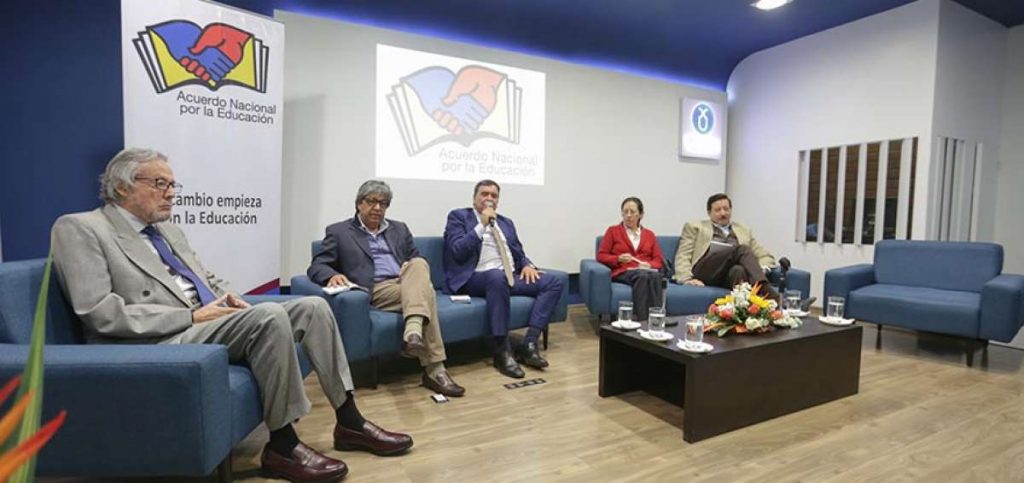
Social organizations, civilians and authorities prepare a diagnosis of the academic situation in the country. They also propose solutions to the problems that exist.
Ethno-education was included in the dialogue. National Agreement for Education is one of the seven axes included in the Ecuador 2030 National Agreement, which is promoted by the Presidency and the Vice Presidency of the Republic.
The objective is to improve academic quality with short, medium and long term proposals. To achieve this, the actors of this dialogue organized five thematic tables. Patricio Crespo, coordinator of the agreement for education, assures that there is a clear objective: to place the academy in the foreground of the public agenda.
The aim is that the private sector, decentralized autonomous governments, the media, social organizations and the community work in its improvement. The Agreement is the first to be presented. To achieve this, thematic tables were created: Human Rights and Education; Technical Education, Youth and Employability; Education for sustainable development; Education in Values and Ethnoeducation.
The last theme was recently included. Each table is made up of 30 civil society organizations. One of the leaders, María Luisa Hurtado, assures that among the proposed proposals is that ethno-education be recognized and that institutes with cultural knowledge be incorporated. “We want it to be valid and for children to know their culture.”
The ethno-education table is made up of 10 Afro-Ecuadorian organizations from Quito, Guayaquil and Esmeraldas: Red de Mujeres, Conamune, Afro-Pueblo and Fundación Azúcar. Crespo explains that each table follows a flexible process.
They have to do a review of the most relevant actors. Then its members develop a state of affairs on what are the problems and public policies to address them. Each table prioritizes the construction of public policy proposals, their implications and what changes should be made. Then it is validated with more social actors.
Finally, a positioning process is done so that they can be received by the different entities. In a recent intervention in Azuay, the education minister, Milton Luna, assured that the National Agreement should be lifted based on the current problems and the lags that come from the colony.
The table of Human Rights and Education, considers four aspects considered the most incidences in violation of human rights: violence in the classroom and internet; the growth of adolescent pregnancies, the exclusion of students with disabilities or catastrophic illnesses and the minors who emigrated. Ernesto Delgado, who is its coordinator, assures that this approach is novel.
Children and adolescents go from being users of a service to holders of rights. “They have to receive another treatment within the campuses: participation, voice and enforceability of rights.” In the first 45 days the proposals will be socialized.
Crespo points out that in the next few days they will present the educational texts by modules, which incorporate the focus on values. “It is the result of the work of the table on values led from Guayaquil.” In December it is expected that the proposals are ready to be taken to the Assembly, to make a popular consultation or other actions. (I)
Source: https://www.eltelegrafo.com.ec/noticias/politica/3/derechos-menores-prioridad-agenda-nacional2030