International organizations insist that migrants face “multiple risks” during their long journey and are victims of “coyotes.”
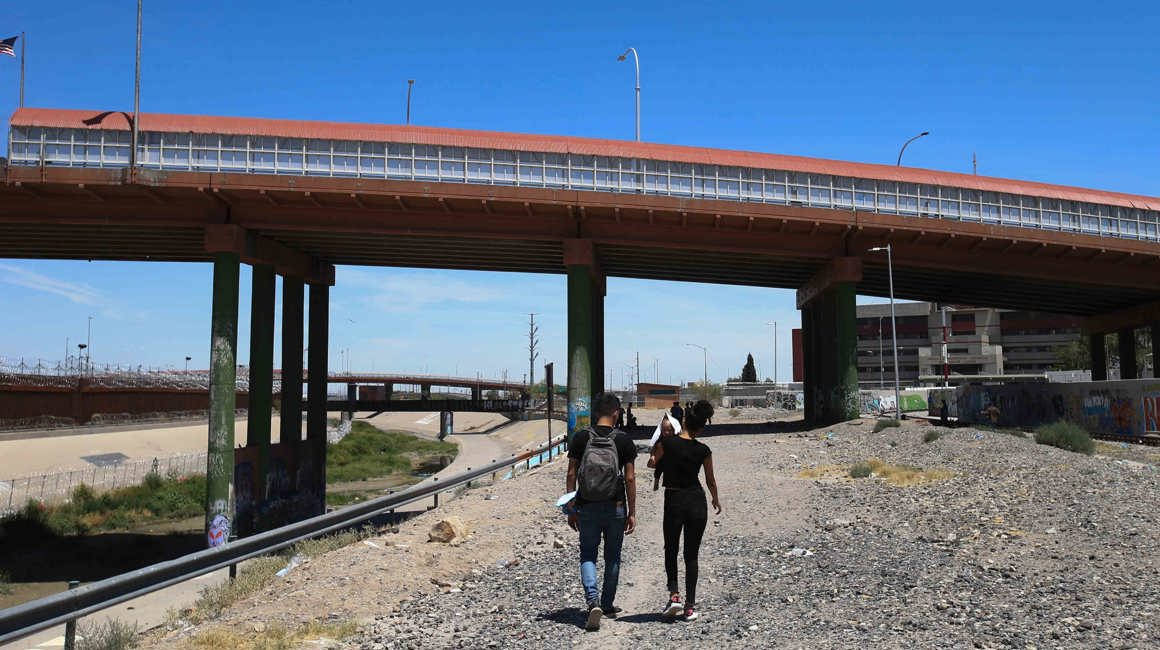
Two Venezuelan migrants walk near the Paso del Norte International Bridge. Mexico, July 24, 2023.
More than 168,000 migrants in transit to the United States have entered Honduras irregularly this year, according to figures from the National Institute of Migration (INM) consulted this Thursday by the EFE news agency.
The number of migrants who entered the country between January 1 and July 23 is 163.2% higher than the 63,920 foreigners registered in the same period of 2022, the year in which around 188,858 of these travelers transited through Honduras, he said. the INM.
With four days to go until the end of the month, July has been the one with the highest flow this year, with 32,741 irregular migrants entering the Central American country, the institution detailed.
Migrants who have arrived in Honduras come from:
- Venezuela: 67,092
- Ecuador: 22,801
- Haiti: 18,824
- Cuba: 15,044
- Chinese: 5,438
- Mauritania: 4,062
- Colombia: 3,832
- Uzbekistan: 3,589
- Senegal: 3,244
- India: 2,567
The remaining 21,741 migrants who entered the country come from more than thirty countries in the world, including Asia and Africa.
If the rate of entries into the country is maintained, this year could close with the arrival of more than 200,000 migrants, according to estimates from different Honduran organizations.
Many of the irregular migrants are received in four Irregular Migrant Care Centers (CAMI) authorized by the Government, where they take their biometric data and receive food and medical care.
The causes of migration
In an interview with EFE in June 2023, the head of mission of the International Organization for Migration (IOM), Nicola Graviano, said that the organization has followed “very closely” the increase in migrants in transit through Honduras since 2022.
Migrants leave their country of origin for “economic reasons, family reunification and escaping from situations of violence,” he emphasized.
According to Graviano, these travelers face “multiple risks” during their long journey and gave as an example, the Darién jungle, the natural border between Colombia and Panama, which in recent years has become “one of the longest migratory corridors dangerous in the world.”
In Honduras, a forced passage for Latin American, African and Asian migrants, migrants suffer many abuses, mainly in the illegal collection of interurban transportation, or from police agents, according to the National Commissioner for Human Rights (Conadeh).
Many of the migrants who transit through Honduras do so through “blind spots” through human traffickers, known as “coyotes,” who do not always take them to the border with Guatemala, according to authorities and human rights organizations.