Previous Story
OAS alerts on forced recruitment of children from Ecuador by armed groups in Colombia
Posted On 22 Jun 2020
In Colombia , three years after the signing of the peace, illegal armed groups continue to recruit minors, a mission of the Organization of American States ( OAS ) alerted on Friday, June 19, 2020 , noting ” high levels of hostility ” in the country.
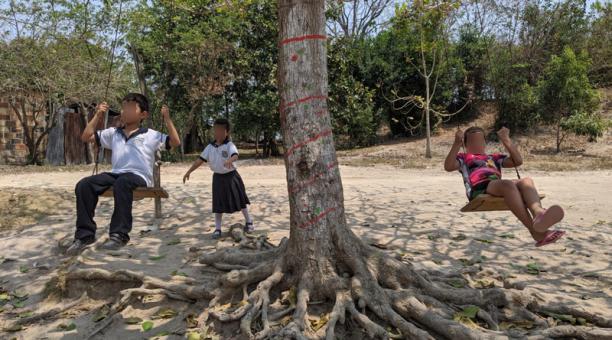
OAS alerts on forced recruitment of children from Ecuador by armed groups in Colombia
“The persistence of the forced recruitment of children and adolescents is alarming ,” said Roberto Menéndez , head of the OAS Mission to Support the Peace Process in Colombia (MAPP / OEA).
In presenting the report on the last semester of 2019 before the OAS Permanent Council , Menéndez also pointed out that “the installation of antipersonnel mines and improvised explosive devices, kidnapping, sexual violence, confinement and displacement, have generated” profound impacts ”in indigenous, afro-descendant and peasant communities.
Bogotá sealed the peace in November 2016 with the now dissolved Revolutionary Armed Forces of Colombia ( FARC ). But the country is still experiencing an armed conflict that in more than half a century leaves almost nine million victims among the dead, disappeared and displaced.
In the South American nation, the world’s leading producer of cocaine, not only ex-FARC dissidents and criminal gangs like the Gulf Clan / AGC operate , but also rebels from the National Liberation Army ( ELN ), the last recognized active guerrilla in the country.
According to MAPP / OEA, which carried out more than 1,200 monitoring missions , the expansion of territorial control of illegal armed groups affected areas in the west, northwest, and center-south of the country, as well as those bordering Venezuela ( Catatumbo, Arauca ) and with Ecuador ( Pacific Nariñense, Putumayo ).
In these regions there continue to be areas affected by illicit economies, violence and crime, with the absence or weak presence of the State.
The report said the ELN takes advantage of school spaces to “induce or compel” students to join the organization. He also pointed out the forced recruitment of minors by the ELN and dissent from the exFARC in indigenous reserves and black communities.
Males are used for surveillance activities, extortion charges , transportation, and military-type activities. In the case of indigenous people, illegal armed groups take advantage of their knowledge of the terrain to use them as ” security rings “, which leaves them more exposed to law enforcement operations.
Girls and adolescents play roles as recruiters of other minors and are victims of sexual exploitation and assault.
“Low cost labor”
The MAPP / OEA also reported on the dynamics of the bonding of minors from Venezuela and Ecuador.
“They are considered low-cost labor compared to the Colombian population. In addition, the informality of his residence in Colombia makes it difficult to link to judicial investigations, as well as the establishment of complaints by his relatives, “the report indicated.
The mission indicated ” concern ” that the inclusion of minors in the ranks of illegal armed groups is perceived as “voluntary” and not as a violation of their rights .
Another problem identified is the threats and forced displacement suffered by parents, teachers or ethnic authorities when they try to recover minors recruited directly from armed actors.
” Recruitment dynamics are not always reported or brought to the attention of the competent authorities,” said the report.
The MAPP / OEA recognized the creation in November 2019 by the government of an intersectoral commission for the prevention of this phenomenon. But he called on the Colombian State to strengthen local institutions and protect the municipalities where it has not yet intervened.
Aside from the forced recruitment of minors, the MAPP / OEA said that access and defense of land continues to be a “risk scenario” in Colombia and warned “with high concern” about harassment , forced displacement and killings against social leaders and indigenous and ex-combatants in the process of reintegration, particularly in territories of illicit crops in the west, northwest and south central of the country.
The mission reiterated that coca leaf, the raw material for cocaine , continues to be the main source of livelihood in several municipalities, where pressures from illegal armed groups hinder the implementation of plans for voluntary substitution and forced eradication.
Menéndez called for an “urgent” approach to all the edges of “narcoactivity”, which he considered “one of the drivers of violence in Colombia”.
https://www.elcomercio.com/actualidad/oea-reclutamiento-ninos-ecuador-colombia.html