Previous Story
Campaña proposes reducing tax on the exit of currency in 4 years
Posted On 27 Feb 2019
Ecuadornews:
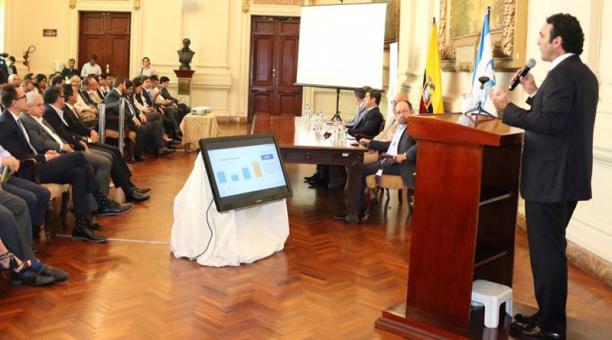
The Ministry of Production, Foreign Trade, Investment and Fisheries (Mpceip) has a proposal to progressively reduce the tax on the exit of foreign currency (ISD) in four years. In an interview with this newspaper, the holder of this Portfolio, Pablo Campana, said that the idea is to start this year “a gradual decrease of 25% of ISD”, so that in 2022 no one would pay.
The reduction rate will be 1.25 percentage points each year; that is to say, that this year it goes down from 5% to 3.75% and so on, until it reaches zero. “We are aware that this will affect the fiscal fund and, therefore, the last word is the Ministry of Finance and the President of the Republic,” said Campana.
The change does not require a legal reform. The Second General Provision of the Law of Productive Development, approved in August of last year, establishes that the Executive may “on the basis of the conditions of public finances and balance of payments, gradually reduce the rate of the tax”.
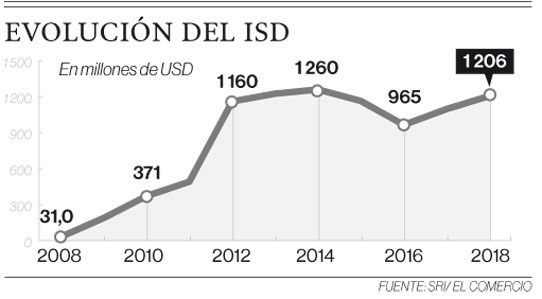
The tax was created with the Reform Law for Tax Equity, on December 29, 2007, during the Government of Rafael Correa. The measure started at 0.5% in 2008 and progressively increased to reach 5% in 2011. Since then it has remained at those levels. “It was created under the idea of protecting dollarization, so that people do not take their money out of the country,” explained Pablo Guevara Rodríguez, partner at Andersen Tax & Legal.
The reality is that its collection has grown to become an important contribution to the State’s finances. Last year, USD 1 206 million was raised for this concept; that is, 109 million more than in 2017. In 2008, the collection was just USD 31 million. The Government has generated exemptions to reduce the effects of the tax on some activities. In 2010, for example, transfers of up to three basic salaries abroad and the importation of electric and induction stoves were released. In the Law of Promotion has also been considered the release of the tax in cases such as “new productive projects that sign investment contracts” or new imports of capital goods and raw materials.
Carlos Licto, a tax lawyer, calculates that around 15 exemptions have been issued. With this scenario, businessmen are optimistic about an eventual downward adjustment of this tax burden.
For José Antonio Camposano, president of the National Chamber of Aquaculture (CNA), the tax “cannot be sacrificed at this time, but could be reduced by half.” The proposal of the guild is to eliminate it in two years: start 2019 with 2.5 points less and in 2020 finish dismantling it.
The leader of this sector said that his industry requested on December 4 of last year the reduction of the ISD for 64 products (pumps, motor boats, hoses). The request was submitted to the Mpceip to access the benefits described in the Law on Development.
On the other hand, Eduardo Egas, executive president of the Corporation for the Promotion of Exports and Investments of Ecuador (Corpei), has another alternative to the tax “Drop it in two points and leave it at 3%”. But that percentage that is conserved has to be used to encourage exports, he said.
That money will serve to provide liquidity to the simplified tax return mechanism (Drawback), designed to boost the exporter. The ideal scenario for both entrepreneurs is to eliminate it, but the economic situation of the country does not allow it.
In case the decrease occurs, the compensation in collections is in the income tax, Licto suggested. The collection of this tax could rise thanks to the draft Law of Repatriation of Capital that the Executive is planning to send to the Assembly in the medium term. For Guevara, the answer lies in the increase of two points in the VAT. But Campana said that in tax matters “there will be no surprises”. (I)
Source: https://www.elcomercio.com/actualidad/pablo-campana-reduccion-salida-divisas.html