The Economist believes that the struggle between the Legislative and the Executive will delay urgent reforms to boost economic activity.
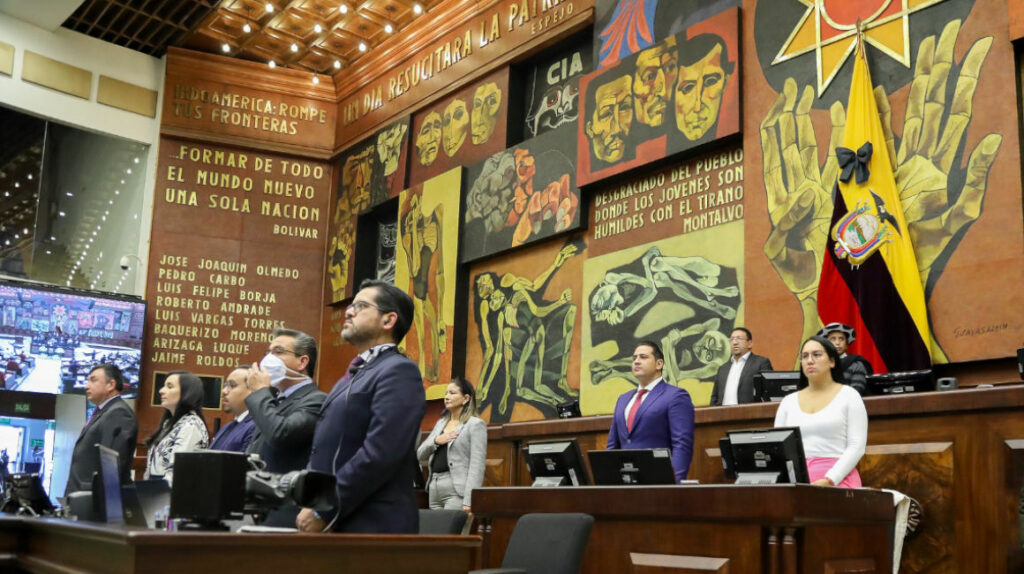
Session of the Plenary of the National Assembly on September 8, 2022.
The Intelligence Unit of the British firm The Economist Group forecasts that Ecuador’s economy will grow 2.4% in 2022 and no longer 3.5%, as projected in February.
The Economist lowered the estimate due to hostility between the National Assembly and the central government.
The struggle between both powers of the State is an obstacle for the approval of reforms that promote the economic recovery of Ecuador, adds the report.
In addition, the national strike of June 2022 and the poor results in the dialogue tables between the Government and the indigenous movements will also weigh down the economy, says the firm.
The study projects that the economic recovery will be slower as of 2023. The Gross Domestic Product (GDP) will grow 1.7% on average between 2023 and 2026.
Labor reforms
Labor reforms are measures that could boost the economy, but they are at risk, adds The Economist.
The unemployment rate will be 4.1% in 2022 and will remain at 4.2% in the period from 2023 to 2025, mentions the Intelligence Unit of The Economist.
To change this scenario, the Central Government should implement reforms so that companies can make more flexible contracts. But such a change requires Legislative approval and will be a challenge, warns The Economist.
The Minister of Finance, Pablo Arosemena, proposed that a question on hourly hiring be included in the referendum being prepared by the Executive.
High risks
Other pressures that put a faster GDP recovery at risk are inflation and insecurity.
These problems open the way to new protests due to social discontent; the report warns.
Inflation will be 4.9 % in 2022, the firm forecasts, that is, 0.3 points more than in its previous projection, due to the national protests in June 2022.
The Economist estimates that annual inflation will fall between 2023 and 2026. In those years, the indicator will be 1.8% on annual average, but there are still challenges.
Among them is a high risk of new protests because there are no firm agreements on the targeting of fuel subsidies.
And, if the price of oil rises in 2023, the government will spend more on subsidies.
The debate over the targeting of fuel subsidies has worried governments for decades and a solution will be difficult to find, the study warns.
The firm suggests that the government use the additional income left by the increase in oil prices in 2022 to accelerate investment and improve the quality of public services.
Thus, President Guillermo Lasso could reduce the political and economic risks of possible new protests.
Financing
Due to the hostility between the Executive and the Legislative, the international markets perceive political weakness and instability in Ecuador, says the study.
In addition, the national strike accentuated the fears of foreign investors.
These two factors influenced investors to perceive Ecuador as a country with a higher risk of defaulting on its external debt, says the study.
And as a result, the doors to obtain financing through bonds in the external market were closed to Ecuador, at least during 2023.
With the country risk at 1,494 points, the State will have to pay an interest rate of 18% to 20% if it issues bonds.
For this reason, The Economist predicts that the government will seek a new economic agreement with the International Monetary Fund (IMF) in 2023.
Even if the government manages to obtain more loans from other multilateral organizations, the resources will not be enough, says the document.