Previous Story
Tsunami response systems will be approved
Posted On 10 Jan 2018
Ecuadornews:
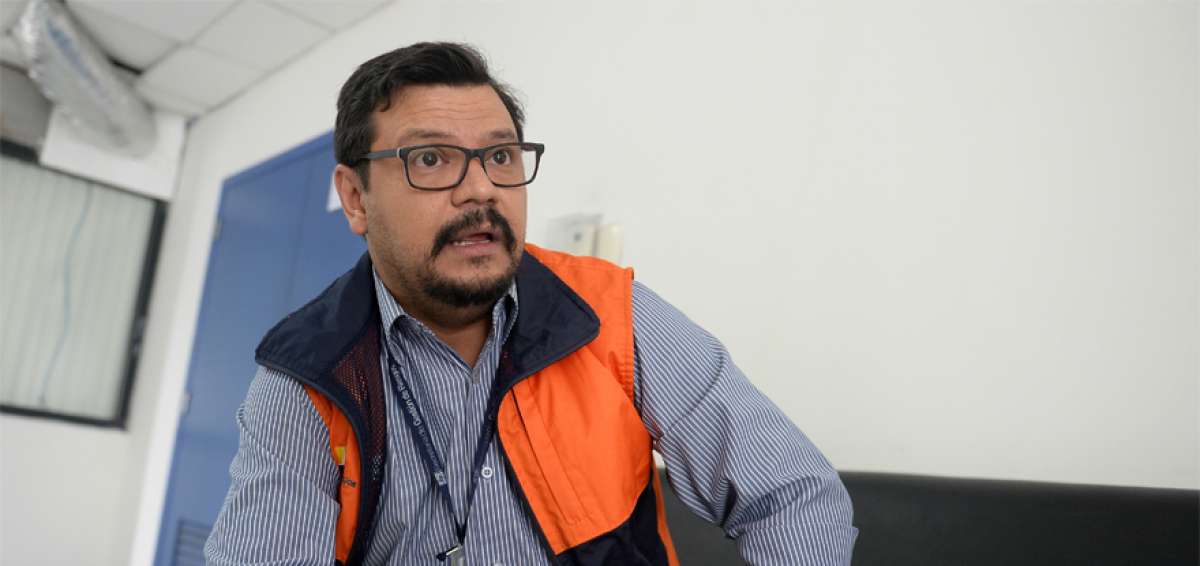
Five provinces, including Galapagos, will participate in an exercise (next January 31) that will evaluate the implemented proposals, which incorporate sirens and community networks. January 31, 1906 at 10:36 (according to the record of the Geophysical Institute) there was an 8.8 magnitude earthquake with an epicenter in the Pacific Ocean and in front of the Ecuador-Colombia border.
The telluric movement, which lasted approximately two minutes, formed a tsunami whose waves reached 5 meters. “All the houses settled near the beach or in the estuarine zone formed by the Santiago and Mataje rivers were destroyed; around 1,000 to 1,500 people died, “recounts a 1992 investigation. The date of that event was chosen by the Secretariat of Risk Management (SGR) to conduct a national simulation of this type of disaster, Fabricio Echeverría, zone coordinator 5 and 8 of the institution, explained the details of the initiative.
What are the antecedents of the drill?
In1906, Esmeraldas was the third military zone of the country and that earthquake was devastating and delayed the development of the province. Choosing January 31 as the date for the simulation allows us to position it in the collective memory as the day for preparation in risk management.
Last year, the first exercise was carried out in the communities that were hit directly by the earthquake of April 2016, but it was concentrated in Manabí and Esmeraldas to position an early warning system, a series of sirens that allows evacuating people to the safe sites.
This year Santa Elena is incorporated with its three cantons, Galápagos and Guayas with the canton Playas.
What kind of preventive assurances currently exist on the Coast?
Importantly, here there are different levels and capacities installed in the coastal cantons. Salinas is in the process of implementing an early warning system that will be integrated into the ECU-911 system and research centers, such as the Geophysical Institute.
La Libertad and Santa Elena have a community network that they will put to the test, and this will allow generating an evaluation of their capacities and being able to prioritize and plan the implementation of these devices. Institutionalizing these exercises every January 31, in the coastal profile, is the main objective of the secretariat.
Are there these tsunami warning systems in the coastal profile of the country?
There is an alert system that was put to the test last year in Manabí and Esmeraldas. The idea is to incorporate the systems that Santa Elena has in this case, Salinas goes through a system of sirens, La Libertad and Santa Elena have the community system, and Galápagos has independent sirens from the Municipality of Santa Cruz with the Navy, which would join the exercise.
In the medium term, it would be best to standardize these systems, but the important thing is to have a network at various levels of action and put it to the test. This is a very rich exercise because it allows us to see the response capabilities and the scope of these in each territory.
Are there studies on the vulnerability of the Ecuadorian Coast and the insular region regarding tsunamis?
There are studies. We are in a convergence zone due to the subduction of the Nazca plate and the Continental plate. Towards the northern zone more powerful earthquakes occurred because there is a submarine transverse mountain range that, when the subduction takes place, there is a rupture of these plates and that generates earthquakes over 7 degrees of magnitude. The Galapagos Islands themselves are part of this mountain range.
To instruct the public, should we expect a tsunami every time there is an earthquake on the Pacific Ocean seabed?
Regardless of the distance from the coast, the occurrence of a tsunami on the Ecuadorian coasts will depend on the orientation. If the earthquake is very high, about 7 degrees of magnitude, and it is not so deep, that earthquake could have conditions for a tsunami. For example, in Galapagos the earthquake was 5.1 and, plus the depth, did not represent a danger to the Coast. When it happened in Japan (2011) a swell came to the country, what was not calculated well was the time of arrival.
The earthquakes in Galapagos are not related to volcano
The Geophysical Institute (IG) of the National Polytechnic School of Ecuador registered an earthquake of 5.1 magnitude on Monday in a peripheral area of the Galapagos Islands, produced in an area of the boundary between Nazca and Cocos plates.
The epicenter of the quake, which occurred at 19:05 local time, was located at 1.74 degrees north latitude and 91.6 degrees west longitude, at a depth of 10 kilometers. In the same marine zone yesterday, at 12:38 local time, another earthquake of 4.7 degrees was recorded, also related to the phenomenon of separation of the plates of Nazca and Cocos, explained Mario Ruiz, of the area of Seismology of the IG.
This type of earthquakes is common in border areas of plaques, Ruiz added after clarifying that these are not related to another seismic source registered by the IG in the Sierra Negra volcano, on Isabela Island, in the west of the archipelago. Yesterday’s earthquakes were located about 200 kilometers north of the volcano, Ruiz said.
Probably, this other seismic source is related to an injection of magma in the Sierra Negra caldera, reported the IG, which permanently monitors the behavior of that mountain on Isabela Island, the largest of the Galapagos.
The IG, in a special report issued in the afternoon, pointed out that the seismic activity registered in the last days in the Sierra Negra could “be a new pulse of the magmatic intrusion registered the previous year”, when a deformation of the floor was detected from the caldera of the volcano. According to the history of the Sierra Negra, the last eruptions of the volcano happened in an interval of 11.4 years, the last was in 2005.
The Galápagos Island, which is located about 1,000 km west of the Ecuadorian continental coasts, in 1978 it was declared a Natural Patrimony of Humanity by the United Nations Organization for Education, Science and Culture (Unesco). (I)